Courses
Courses
Preview

This is your website preview.

Currently it only shows your basic business info. Start adding relevant business details such as description, images and products or services to gain your customers attention by using Boost 360 android app / iOS App / web portal.

918610362969
Page 1 / 2.89
product image
RADIOGRAPHY FILM INTERPRETATION (RT ...

• For volumetric testing of components, radiography film interpretation (RTFI) is a non-destructive testing (NDT) technique. Radiography creates a latent image of a test specimen on a radiographic film using X-rays or gamma rays. Before radiography, each component must be visually inspected to see if it complies with the relevant code or standard. • An expert and informed person who can assess the quality of a radiograph, spot discontinuities on a radiograph, and determine if those discontinuities comply with the relevant code or standard is a radiographic film interpreter. This module will define the concepts and applications necessary for the interpreter to assess the film's calibre and its components' consistency. Radiographic image analysis and interpretation are frequently used in industry to control the quality of castings and weldments. This program’s objectives are to explain the fundamental conditions for effective interpretation and offer illustrations of the many radiographic forms of weld defects. ELIGIBILITY CRITERIA FOR ADMISSION This course is intended for radiographers, inspectors, engineers, and anyone else who wants to interpret radiographs but isn’t very familiar with radiography’s basic concepts. Radiographic image analysis and interpretation are frequently utilised in industry for castings and weldment quality control. CERTIFICATION AUTHORITY: • SNT-TC-1A (Latest edition) of American Society for Nondestructive Testing • CSWIP (As per ISO 9712) ...

0 INR View More

product image
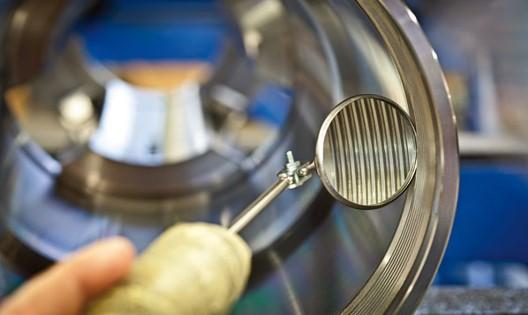
VISUAL TESTING (VT)

The simplest and most popular inspection techniques Fluoroscopes, borescopes, magnifying glasses, and mirrors are examples of tools. Large tanks and vessels, railroad tanks, and vehicles can all be inspected using portable video inspection equipment with Zoom. Visual examination, also known as visual testing, is one of the most often used NDT techniques. It is thought to be the most fundamental and traditional of its kind. After all, the naked eye or the sense of sight, as well as one’s hearing, smell, and touch, were initially necessary to assess assets visually. Visual examination was widely utilised to assess objects, places, and structures back then because no special inspection instruments, equipment, or gadgets were available. Visual inspection is the observation of any component, joint, or other piping element that is subject to such observation prior to, during, or after manufacturing, fabrication, assembly, erection, inspection, or testing. ELIGIBILITY CRITERIA FOR ADMISSION The target audience for this course is inspection engineers, quality control engineers, NDT operators or technicians, and surveyors who need to be familiar with visual inspection procedures, identify potential issue areas, and appreciate inspection methodology. The examination for this course’s lessons may additionally comprise confirmation of the pertinent specifications for the materials, components, dimensions, joints’ preparation, alignment, joining or welding, supports, and erection. CERTIFICATION AUTHORITY: • SNT-TC-1A (Latest edition) of American Society for Nondestructive Testing • CSWIP (As per ISO 9712) ...

0 INR View More
product image
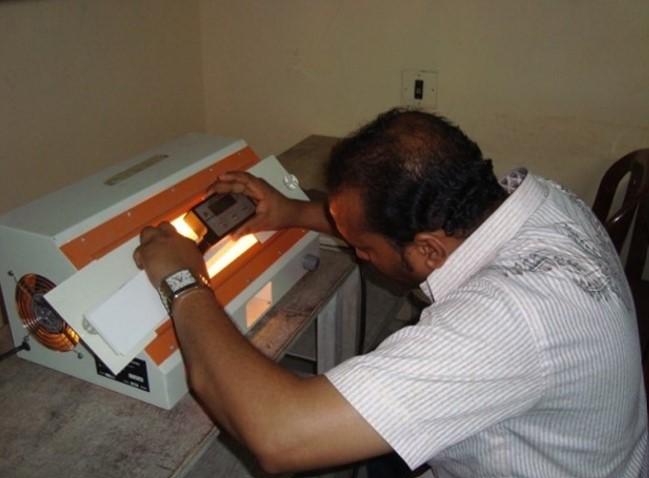
MAGNETIC PARTICLE –MT

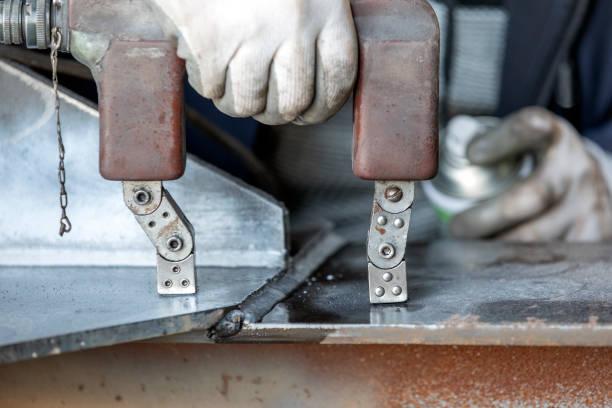
Magnetic particle inspection (MPI) is a nondestructive testing technique for finding flaws. Part surface preparation is not as important for MPI as it is for some other NDT methods, making it quick and relatively simple to apply. Due to these qualities, MPI is one of the most frequently used techniques. . To find faults in components, MPI uses magnetic fields and tiny magnetic particles, such as iron filings. A ferromagnetic substance, such as iron, nickel, cobalt, or certain of their alloys, must be used to make the component being inspected for it to be inspectable. Materials that can be magnetised to a degree that makes the inspection effective are ferromagnetic. A range of product shapes, including castings, forgings, and elements, are inspected using this technique. Magnetic particle inspection is used across various sectors to assess a component’s usability. The structural steel, automotive, petrochemical, power generation, and aerospace industries, to name a few, are some examples of sectors that use magnetic particle inspection. Another area where magnetic particle inspection may be employed is underwater inspection to test things like offshore infrastructure and underwater pipelines. ELIGIBILITY CRITERIA FOR ADMISSION All NDT employees, mechanical engineers, inspectors, and technicians involved in or in charge of weld inspection, inspection of castings and forgings during fabrication, or in-service inspection are intended for this course. You will learn about magnetic lines of force, testing procedures, reading test results, demagnetisation, hands-on activities, and report writing instruction. CERTIFICATION AUTHORITY: • SNT-TC-1A (Latest edition) of American Society for Nondestructive Testing • CSWIP (As per ISO 9712) ...

0 INR View More
product image
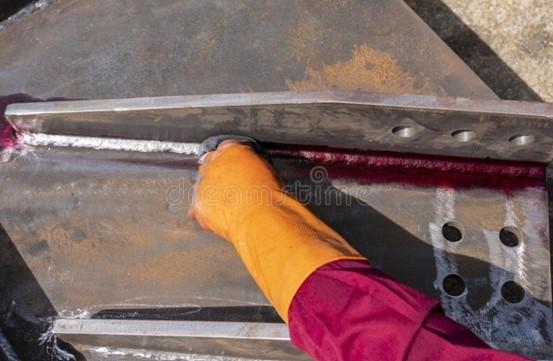
LIQUID PENETRANT TESTING(LPT)

Liquid penetration inspection finds surface-breaking faults by observing the bleed out of a coloured or fluorescent dye from the flaw. The method is based on a liquid’s capacity to be sucked into a fault in a “clean” surface via capillary action. An extra surface penetrant is removed, and a developer is added after a period known as the “dwell.” Acting as a “blotter” makes the imperfection visible; it extracts the penetrant from it. Fluorescent penetrants must be utilised in dimly lit areas with an ultraviolet “black light,” whereas coloured (contrast) penetrants require strong white light. A pre-cleaned component’s surface is treated with a penetrant solution. Capillary motion causes the liquid to be drawn into surface-breaking flaws. The surface is meticulously cleansed of extra penetrant substances. The imprisoned penetrant is drawn back to the surface with the help of a developer, where it spreads out and creates an indication. Compared to the actual defect, the indication is considerably simpler to perceive. ELIGIBILITY CRITERIA FOR ADMISSION The course is designed for all NDT personnel, as well as mechanical engineering and Qc engineering for welding inspection. CERTIFICATION AUTHORITY: • SNT-TC-1A (Latest edition) of American Society for Nondestructive Testing. • CSWIP (As per ISO 9712). ...

0 INR View More
product image
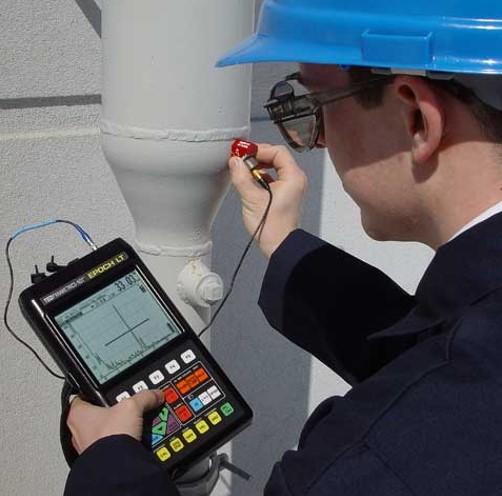
ULTRASONIC TESTING (UT)

Ultrasound testing is one of the most important NDT techniques for finding interior discontinuities. substance is penetrated by an ultrasonic beam, revealing discontinuities on an oscilloscope. High-frequency sound waves that human ears cannot hear are known as ultrasonic waves. The range of frequencies the human ear can hear is from 20 to 20,000 cycles per second. For the testing of engineering materials, ultrasonic waves typically range in frequency from 0.5 MHz to 10 MHz. The production of such high-frequency waves is made possible by the piezoelectric effect. Essentially, in ultrasonic testing, we inject ultrasonic waves into a specimen. Due to the material’s characteristics and discontinuities, these waves encounter changes in their propagation. Testing equipment may detect these changes, which are then shown as an indicator. Acceptance criteria are used to evaluate an indication. • Inspection with ultrasound (Pulse-ECHO) when high frequency sound waves are delivered into a material, surfaces) or defects reflect the sound waves to the source. The depth of the structures that reject sound are visible in a cross-section of the specimen as reflected sound energy is exhibited against time. • It covers the characteristics of sound waves, how ultrasound is produced, how it interacts with objects and boundaries, different kinds of probes, test methods, tools, instruments, test variables, inspection approaches, and different types of discontinuities. ELIGIBILITY CRITERIA FOR ADMISSION All employees, including technicians with diplomas and mechanical engineers, inspectors, and quality engineers, are intended for this course. Also appropriate for those working in the aerospace industry. CERTIFICATION AUTHORITY: • SNT-TC-1A (Latest edition) of American Society for Nondestructive Testing. • CSWIP (As per ISO 9712). ...

0 INR View More
product image
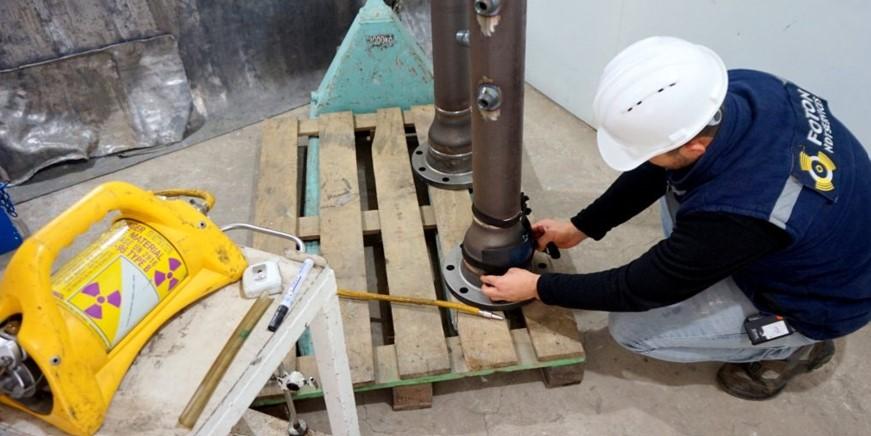
RADIOGRAPHIC TESTING (RT)

• The NDT method of radiographic inspection or radiography is covered in this subject. Some of the energy from X-rays or gamma rays passing through materials is absorbed or altered, and the degree of absorption is based on the thickness, density, and atomic number of the absorber. The fluctuations in the intensity of the emerging beam are captured as visible images or signals using some sort of detector, such as film, a fluorescent screen, or a Geiger-Muller counter. The created image is assessed to find discontinuities. The main goal of industrial radiography is to capture images on film. ELIGIBILITY CRITERIA FOR ADMISSION: • This program is intended for mechanical engineers, inspectors, welding supervisors, and engineers with a diploma or higher in SSLC, Higher Secondary, or an equivalent program. You will learn about the characteristics of X- and gamma rays, film selection, density, film processing, and weld flaws in this course. Additionally, you will learn about castings, reporting, choosing picture quality metrics, and factors affecting contrast and definition. • Training follows SNT-(latest TC-1A’s version) ASNT criteria, and the course concludes with a certification exam. CERTIFICATION AUTHORITY: • SNT-TC-1A (Latest edition) of American Society for Nondestructive Testing • CSWIP (As per ISO 9712) ...

0 INR View More
product image
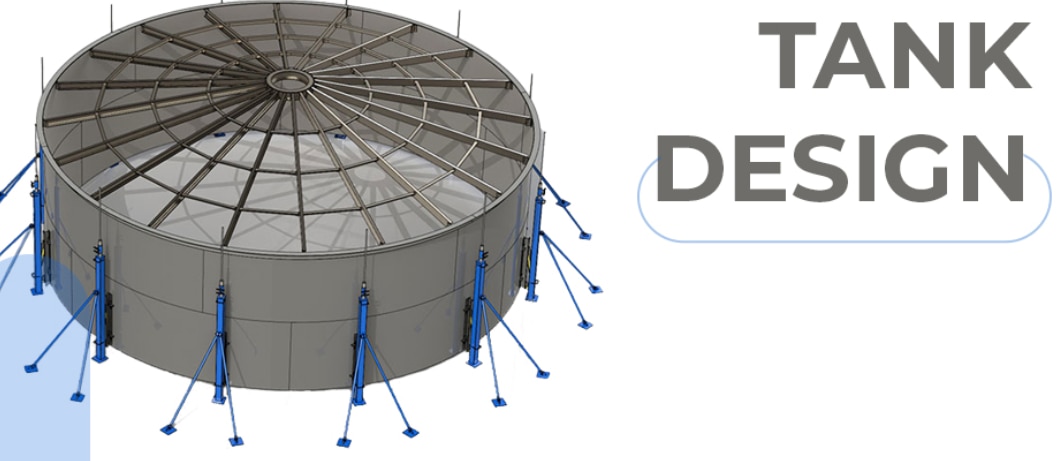
CPD-Webinar-Tank Design

Earn Continuing Professional Development (CPD) hours with Sree Balaji Technical Inspection’s live online webinar on Tank Design. Led by industry experts, this interactive session covers fundamental design principles, material selection, structural analysis, fabrication techniques, failure prevention, and compliance with industry standards. Enhance your expertise and stay up to date with the latest advancements in tank design and engineering. ...

0 INR View More
product image
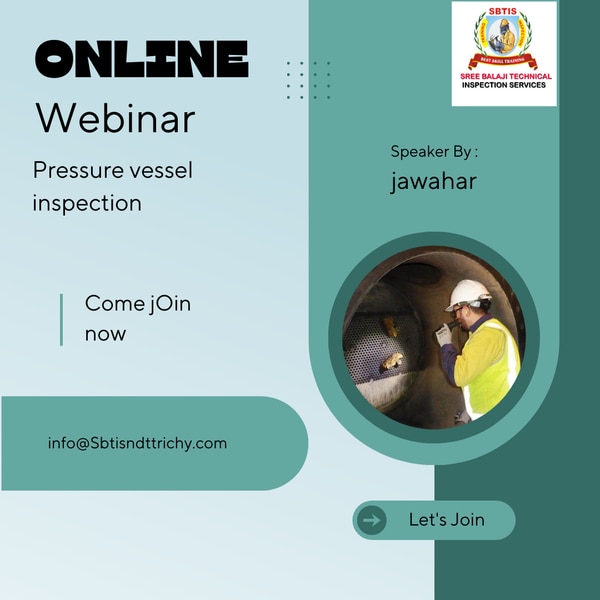
CPD-Webinar-Pressure vessel inspect ...

Join Sree Balaji Technical Inspection’s live online webinar on Pressure Vessel Inspection and earn Continuing Professional Development (CPD) hours. This interactive training, led by industry experts, provides in-depth knowledge of inspection methodologies, integrity assessment, defect detection, failure analysis, safety protocols, and regulatory compliance. Enhance your professional skills, stay updated with the latest industry standards, and ensure the reliability and safety of pressure vessels in various industries. ...

0 INR View More
product image
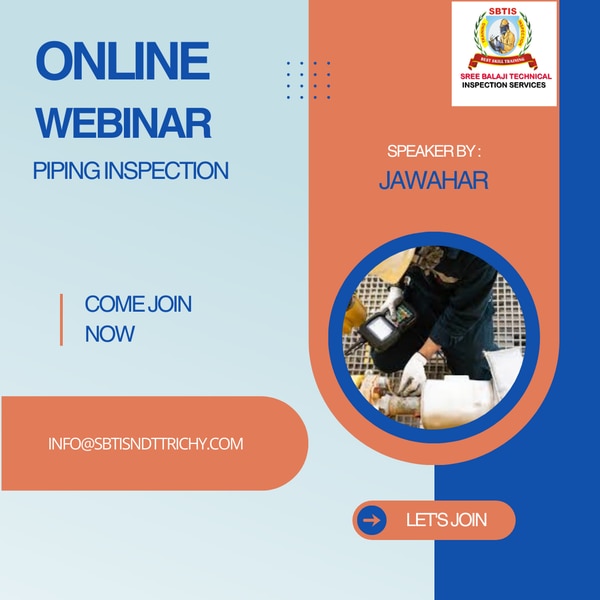
CPD-Webinar-Piping inspection

Earn Continuing Professional Development (CPD) hours with Sree Balaji Technical Inspection’s live online webinar on Piping Inspection. This interactive training, conducted by industry experts, provides in-depth knowledge of inspection techniques, integrity assessment, failure analysis, corrosion monitoring, and regulatory compliance. Enhance your professional skills and stay updated with the latest industry standards. ...

0 INR View More
Page 1 / 2.89
courses